02 · Fuel Operations SaaS · 2026
StationMag Fuel Operations Management Platform
A fuel station management platform designed to centralize operational visibility across stations, pumps, transactions, pricing workflows, reporting and user access control.
Role
Frontend Engineer
Timeline
March 2026 - May 2026
Built for
Internal Product
Status
MVP / Active Development
Operational modules implemented
10+
Station management capability
Multi
Access control workflow
Role-based
Reporting system
Export-ready
The problem
Fuel station operators were managing dispensing logs, pricing changes, and inventory in spreadsheets across multiple sites, creating data inaccuracies and reporting bottlenecks.
The solution
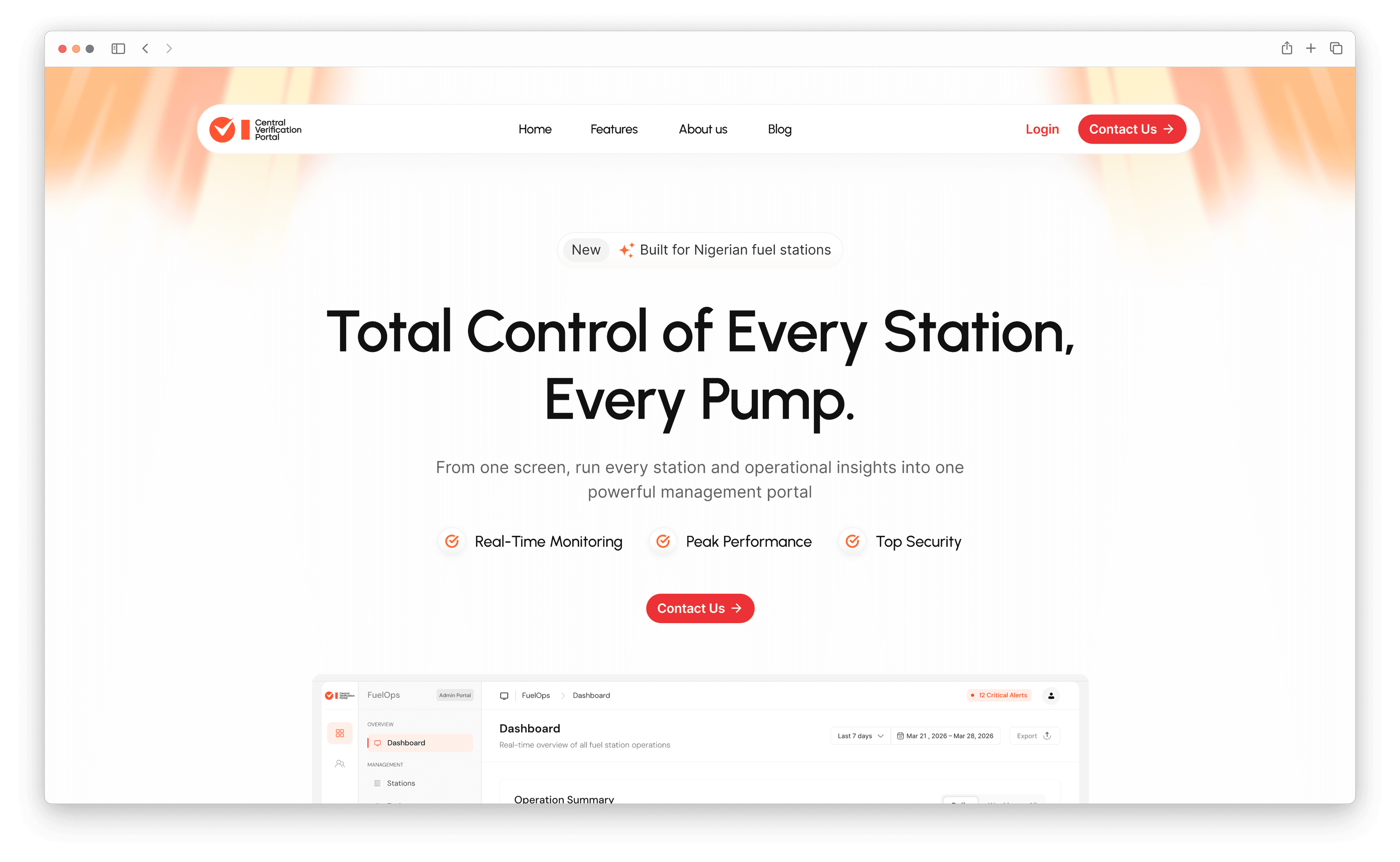
Built a modular operations dashboard that connects fuel station workflows including station management, pump monitoring, transactions, pricing, reporting and user permissions through a structured frontend architecture.
Product gallery
04 screens
Overview
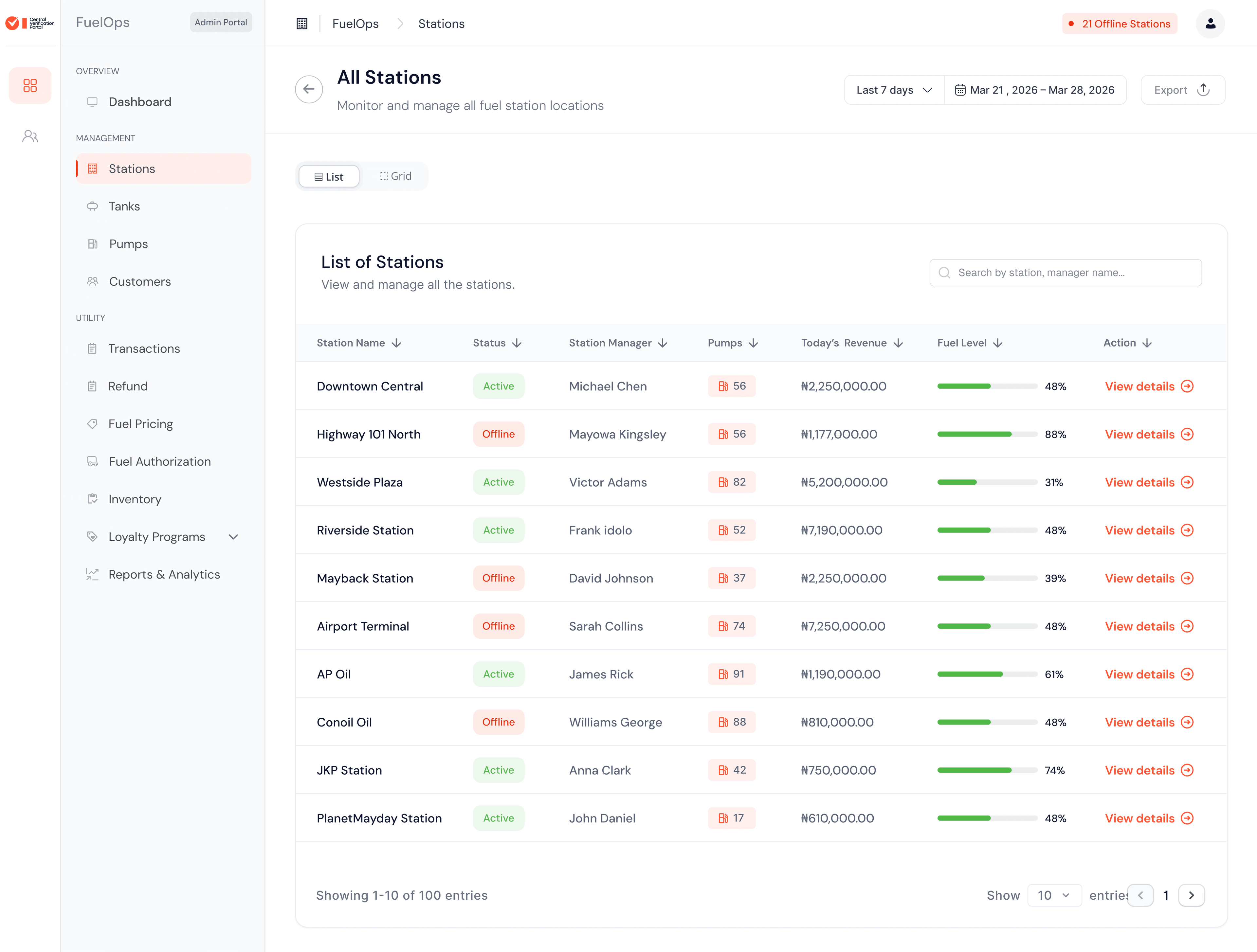
StationMag is a web-based fuel station operations platform built to help operators manage stations, pumps, transactions, pricing, reports and team access from a single interface.
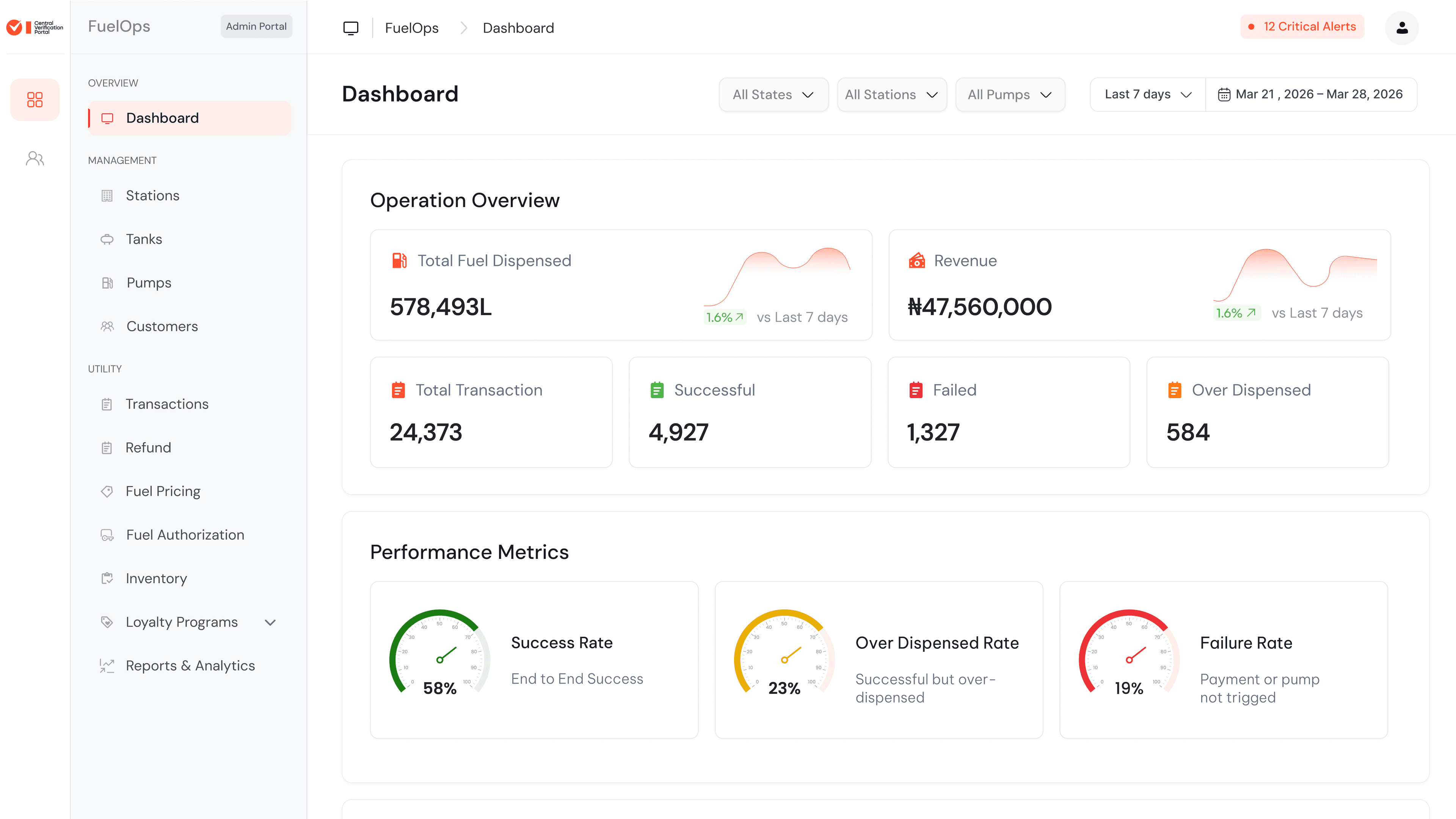
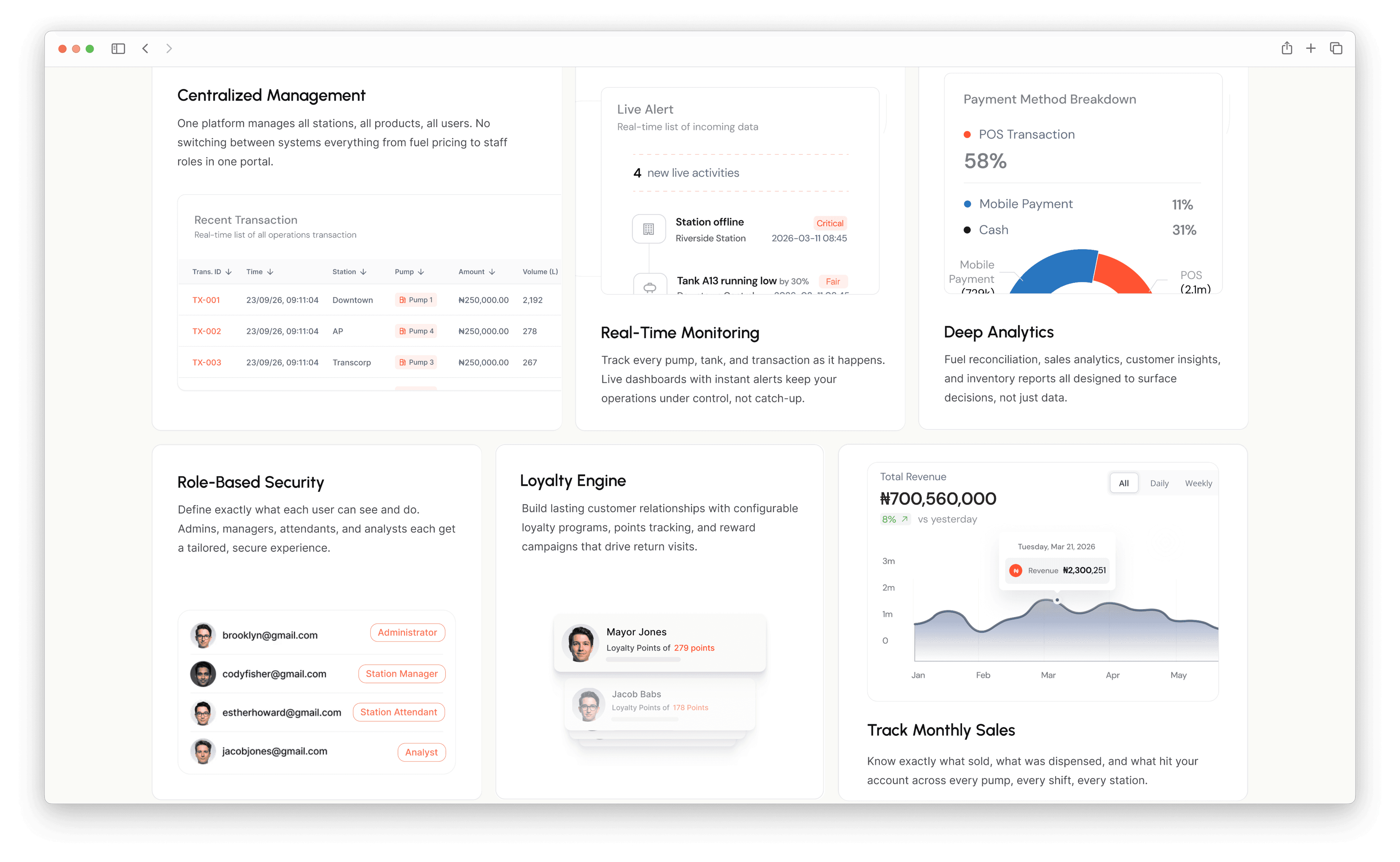
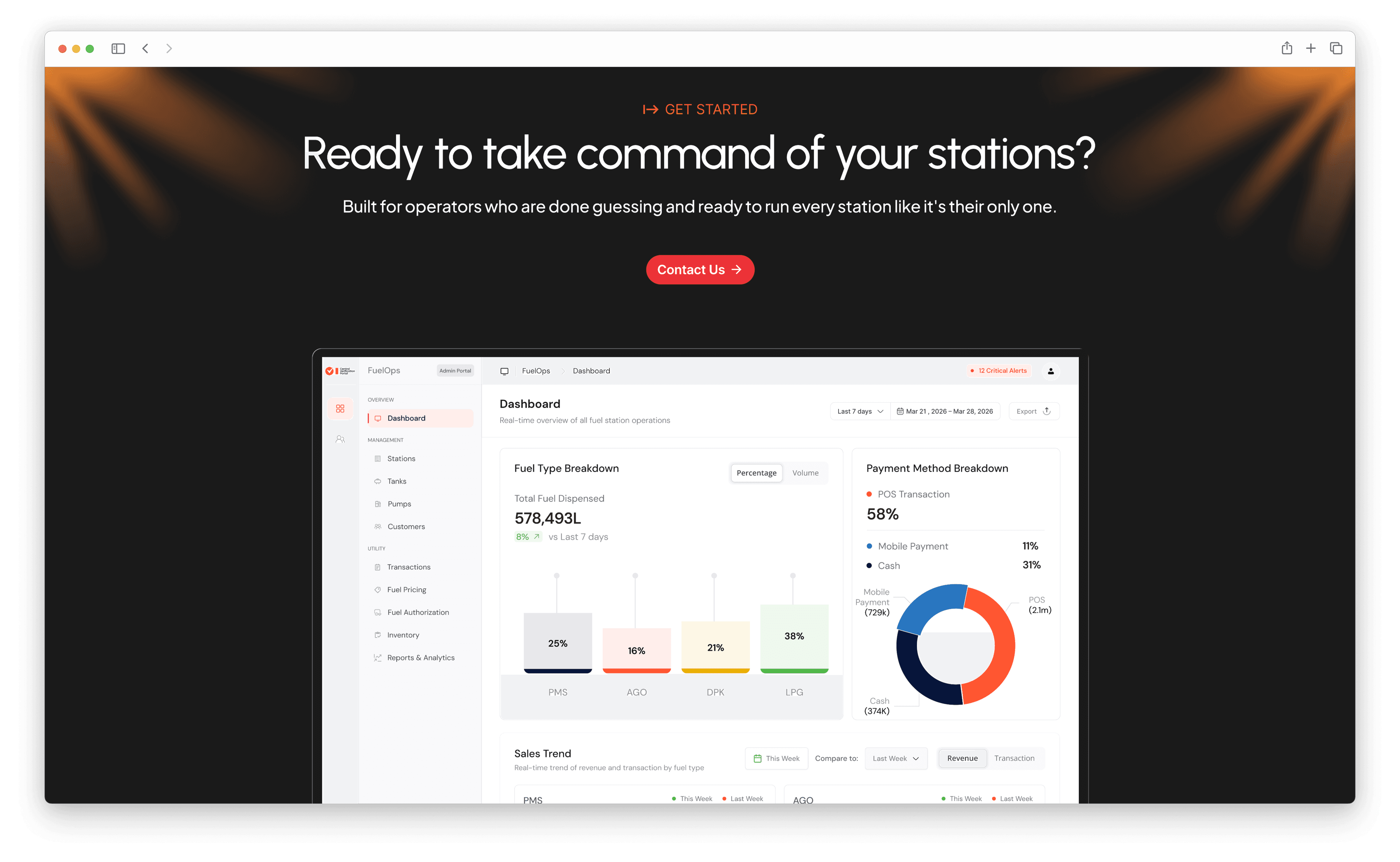
The platform provides operational dashboards for monitoring revenue, fuel dispensing activity, payment status, station performance and administrative workflows.
My contribution focused on frontend architecture, authenticated dashboard development, API integration, reporting workflows, role-aware navigation and reusable operational components.
Challenges
Fuel station operators needed better visibility into daily activities across multiple stations, pumps and transaction records.
Operational teams required different levels of access depending on their responsibilities, creating the need for structured permission management.
Generating reports manually created delays and reduced visibility into important business decisions.
Fuel pricing changes required approval workflows, tracking and synchronization across operational systems.
Key Features
- Station management
- Pump management
- Transaction monitoring
- Fuel pricing workflows
- Price approval system
- Operational analytics dashboard
- User and role management
- Permission controls
- Reports and exports
- Audit activity tracking
Approach
Dashboard-first architecture
Designed the application around operational workflows with dedicated dashboards, tables, filters, analytics cards and reporting views.
Typed API communication
Created reusable API services and React Query workflows for reliable communication with the external backend.
Role-based operations
Implemented permission-aware navigation and protected workflows for administrators, station managers and operational users.
Data-driven reporting
Built filtering and export experiences that allow operators to analyse transactions by station, pump, payment method, fuel type and status.
Project Impact
- Engineered a typed data layer covering 13 operational modules with export-ready reporting
- Built role-based workflows scoped per user type so no operator sees data outside their remit
- Replaced manual logs with a real-time dashboard that handles multi-site operations from one view
Lessons Learned
- Operational software depends on clear domain modelling because every workflow represents a real business process.
- Dashboards are most effective when they reduce decision-making time rather than simply display more data.
- Permission systems should be designed alongside product architecture, not added later.
What I owned
- Frontend architecture
- Admin dashboard development
- API integration
- React Query data workflows
- Authentication implementation
- Role-based UI access
- Reporting interfaces
- Reusable component development
Stack
- Next.js 16
- React 19
- TypeScript
- TanStack Query
- Axios
- Tailwind CSS
- Recharts
- REST API
- External API Integration
Engineering highlights
- 01
Operational analytics dashboard
Created dashboards displaying revenue, fuel activity, transaction trends, payment breakdowns and station performance.
- 02
Reporting and export workflows
Implemented transaction filtering and export workflows supporting operational reporting needs.
- 03
Access control system
Built role-aware navigation and permission-based interfaces for different operational users.
- 04
Reusable admin components
Developed shared tables, filters, cards, dialogs and UI patterns for scalable dashboard expansion.
How we shipped it
- 01
Architecture setup
Established the application structure, API layer, authentication flow and dashboard foundation.
- 02
Operations modules
Implemented station management, pump workflows, transactions, pricing and reporting features.
- 03
Optimization
Improved reusable components, data fetching patterns and user workflow consistency.